
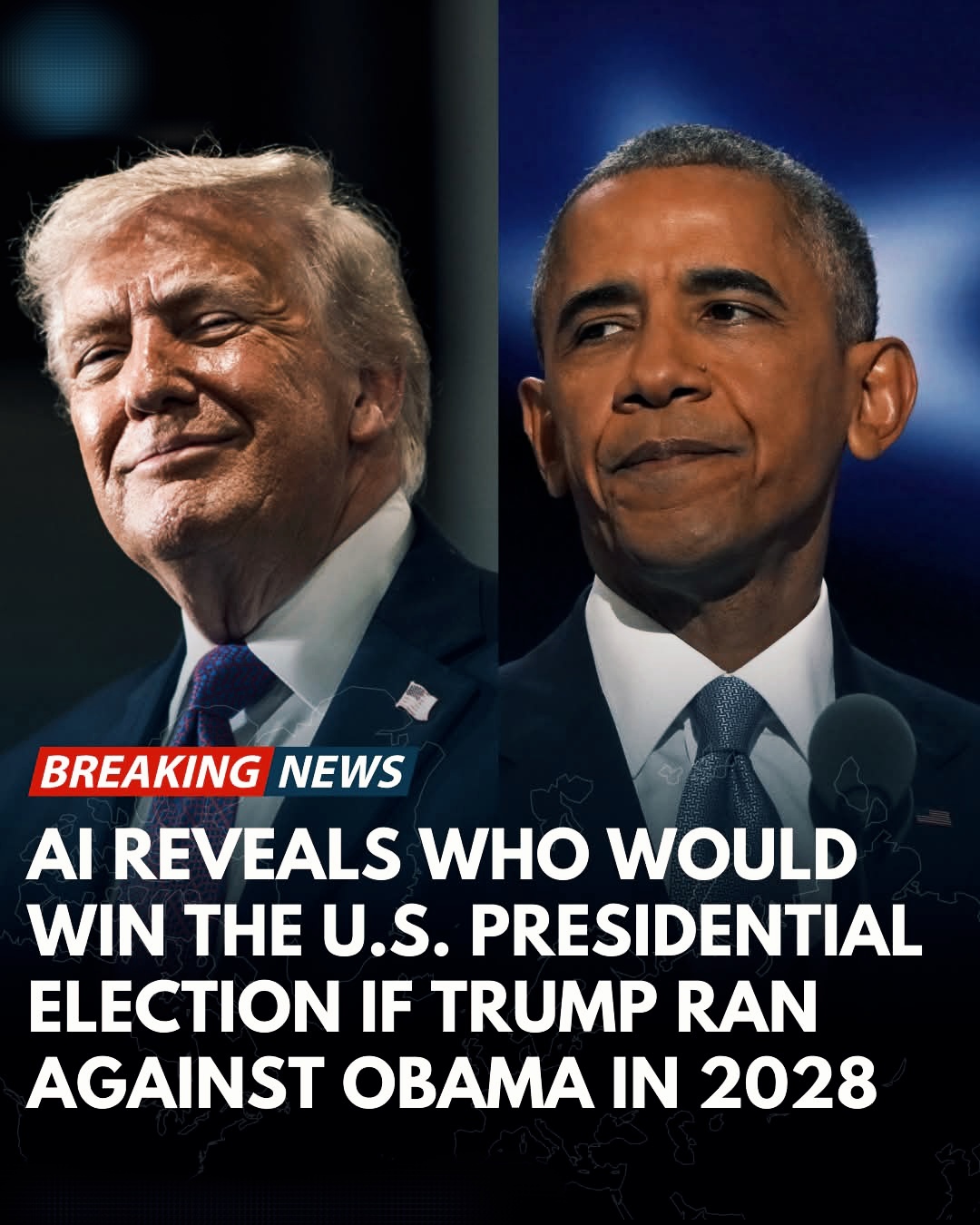
A new artificial intelligence–driven analysis has sparked debate by modeling a hypothetical 2028 presidential race between Donald Trump and Barack Obama. While such a contest is constitutionally impossible due to term limits, the simulation offers a fascinating glimpse into how voters might respond if two of the most influential political figures of the 21st century were to face off once more.
Modeling Voter Behavior in a Fictional Race
The AI system used a combination of historical election data, demographic trends, and voter sentiment analysis to construct a realistic electoral scenario. By drawing from past voting patterns during both leaders’ presidencies, the model attempted to estimate how different regions and demographic groups might shift in a head-to-head contest. Analysts behind the project emphasized that the simulation is not a prediction, but rather an exploration of political dynamics under hypothetical conditions.
Key Demographics and Swing States
According to the AI findings, battleground states would once again play a decisive role. States such as Pennsylvania, Michigan, and Arizona emerged as critical tipping points, reflecting patterns seen in recent elections. The model suggested that Donald Trump would maintain strong support among rural voters and working-class constituencies, while Barack Obama would likely dominate among younger voters, urban populations, and minority groups.
Interestingly, the simulation indicated that suburban voters—often seen as a crucial swing bloc—could determine the final outcome. Their preferences appeared highly sensitive to economic conditions, policy messaging, and candidate tone.
Campaign Messaging and Public Perception
The AI analysis also evaluated how messaging strategies might influence voter behavior. It suggested that Donald Trump would likely lean on themes of economic nationalism, border security, and anti-establishment rhetoric. In contrast, Barack Obama would be expected to emphasize unity, healthcare access, and international cooperation.
Public perception, particularly favorability ratings and media coverage, played a significant role in the model’s projections. The simulation noted that both figures carry deeply entrenched support bases, but also strong opposition, making voter turnout a decisive factor.
Limitations of the Hypothetical Scenario
Experts caution that the analysis has clear limitations. The scenario does not account for unforeseen global events, economic shocks, or evolving political landscapes that could dramatically alter voter priorities. Additionally, constitutional constraints mean such a race could never occur in reality, underscoring the exercise as purely speculative.
A Reflection of Enduring Political Influence
Despite its fictional premise, the AI simulation highlights the enduring impact of both leaders on American politics. More than a decade after their presidencies, Donald Trump and Barack Obama remain central figures in political discourse, capable of shaping narratives and energizing voters across the ideological spectrum.