
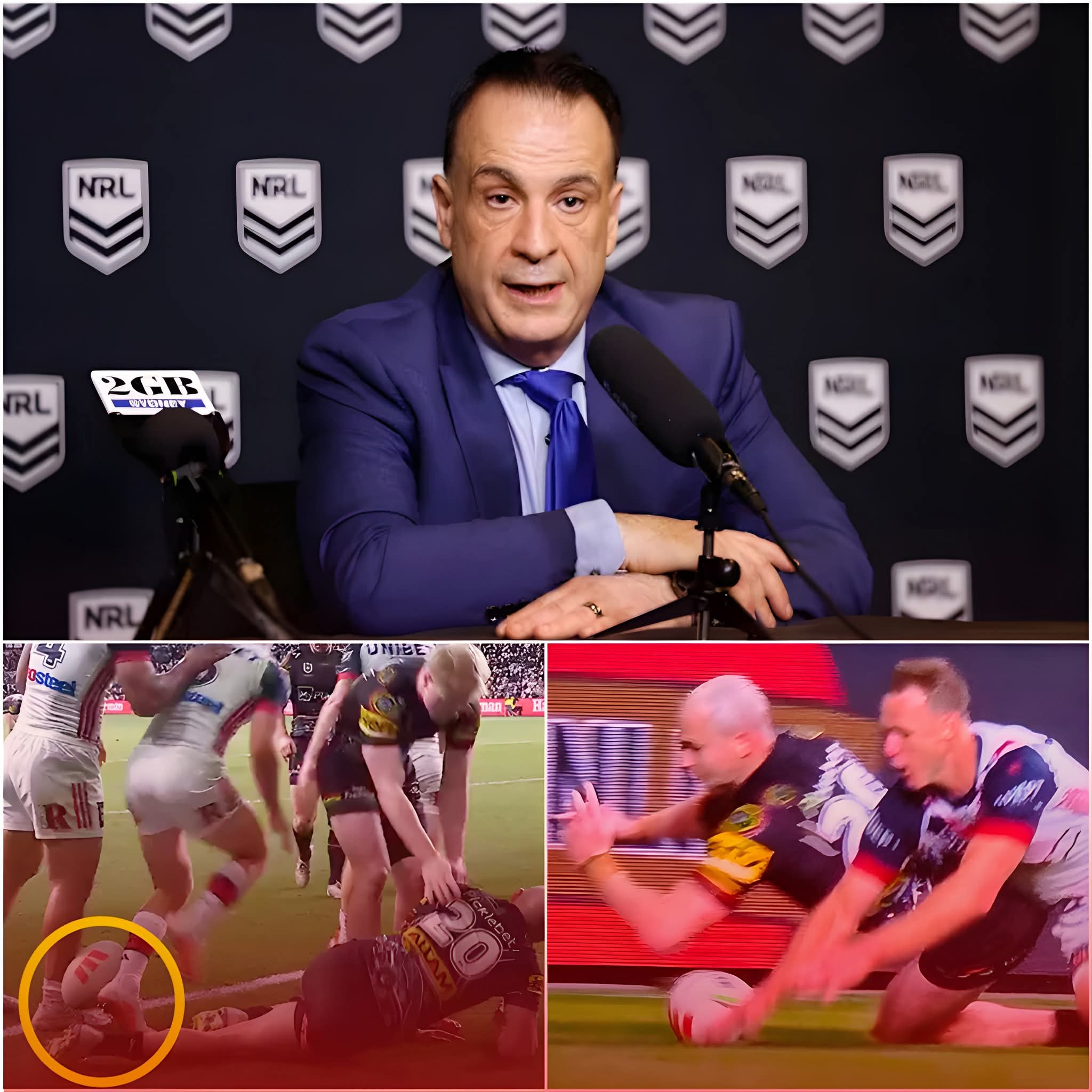
A Seismic Shift in Rugby League Officiating
The National Rugby League finds itself at the center of a historic officiating storm following the fallout from the blockbuster Round 24 clash between the Penrith Panthers and the Sydney Roosters. Veteran referee Adam Gee, one of the game’s most established whistleblowers, has reportedly been handed an unprecedented disciplinary sanction following a sequence of highly contentious rulings during the high-stakes match. According to sources within the Rugby League Referees Association, the severity of the action taken against Gee marks a dramatic departure from standard administrative procedures, sending shockwaves through the sport. While referee performance is routinely analyzed behind closed doors by NRL management each week, the public magnitude and reported weight of this penalty represent what many experts are calling the harshest disciplinary action ever imposed on an active official in top-flight Australian rugby league history.
The Controversial Call That Sparked the Fallout
The catalyst for the uproar centers on a pivotal, match-defining sequence in which a crucial Sydney Roosters scoring opportunity appeared to be denied down the stretch. During a high-kicking aerial challenge near the try line, a collision occurred involving multiple players, resulting in an initial ruling that halted play and negated what could have been a match-winning score for the Roosters. As replays flooded broadcast screens, analysts and fans alike questioned the interpretation of the game’s complex laws—specifically surrounding escort infringements and disruptor guidelines. On-field explanations provided during the heat of the moment failed to quell the mounting confusion, leaving commentary teams and spectator bases utterly baffled. What commenced as standard match review scrutiny quickly escalated into a full-scale institutional crisis as the details of the ruling came under intense microscopic examination by league administrators.
Backlash from Coaches and Officials
Reactions across the competition were swift and uncompromising once news of the extraordinary sanction began circulating among clubs and media outlets. Head coaches and club executives have expressed deeply divided viewpoints regarding the disciplinary measure. Supporters of the penalty argue that accountability at the elite level must apply equally to match officials, contending that severe mistakes during critical moments undermine competition integrity and cost teams valuable ladder positioning late in the regular season. Conversely, representatives from refereeing advocacy groups have raised serious concerns over the potential chilling effect such severe public punishment might inflict on active match officials. Critics of the ruling caution that imposing record-breaking penalties creates an untenable environment of excessive scrutiny, potentially hindering referees from making decisive, split-second judgments in high-pressure match scenarios.
Precedent and Historic Context for Referees
Historically, officiating errors within the National Rugby League have been managed through internal grading demotions, temporary rotations to secondary competitions, or formal performance reviews conducted out of the public eye. Never before has an official of Adam Gee’s stature—having controlled premiership deciders and marquee international fixtures—been subjected to a disciplinary measure of this magnitude following a regular-season encounter. The unprecedented nature of the penalty underscores a growing zero-tolerance posture from football department administrators seeking to enforce consistent interpretations across all fixtures. As debate rages across sports talk shows, podcast platforms, and fan forums, key stakeholders are demanding greater transparency regarding the exact criteria utilized to justify such a monumental disciplinary outcome.
What Lies Ahead for Officiating Standards
As the rugby league community digests the ramifications of this landmark ruling, the incident promises to leave a lasting imprint on how elite matches are controlled moving forward. League administrators now face the delicate challenge of restoring clarity to controversial rule interpretations while ensuring the integrity of the officiating bunker and on-field whistleblowers remains intact. With the finals series rapidly approaching, teams, coaches, and supporters will be watching with heightened vigilance to see how subsequent match appointments and refereeing directives adjust in the wake of this watershed moment.