
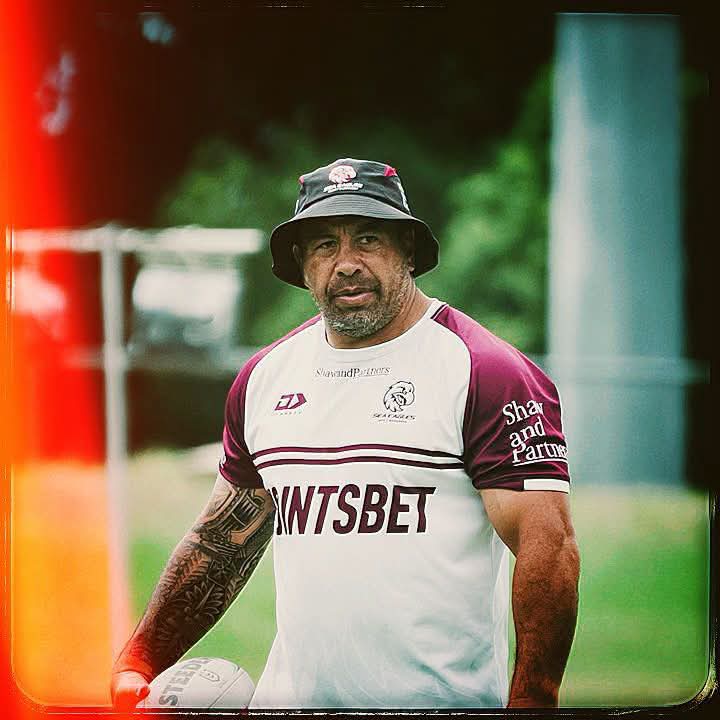
The Manly Warringah Sea Eagles find themselves at a perilous crossroads in their National Rugby League campaign, with widespread scrutiny turning directly toward the club’s defensive coaching setup. Following a damaging five-game losing streak, intense focus has fallen squarely on assistant coach Jim Dymock, who bears primary responsibility for the squad’s defensive structures, tackle technique, and contact mechanics. What began as a campaign featuring occasional flashes of defensive resilience has steadily devolved into a period of acute physical vulnerability, leaving supporters and commentators questioning whether the Northern Beaches outfit possesses the requisite grit to stem the flow of opposition points.
Mounting Questions Over Defensive Architecture
Dymock joined Manly ahead of the 2023 NRL season on a three-year contract, arriving alongside former head coach Anthony Seibold as part of a high-profile coaching overhaul. Brought in specifically to instill a hard edge in the wrestle and refine first-grade contact mechanics, Dymock arrived with an illustrious reputation built across decades as a elite representative footballer and an experienced assistant coach across multiple NRL franchises. However, despite subsequent adjustments within the broader coaching department during the 2026 season, Dymock has maintained his specialized purview over defense. With Manly’s line repeatedly compromised during their current mid-season slump, questions are mounting regarding the longevity and overall efficacy of those existing defensive systems.
A Specialized Role in the Spotlight
In modern professional rugby league, defensive assistant coaches carry immense tactical weight, as contact area control and ruck speed dictate the outcome of top-tier matches. Dymock’s role demands intimate, day-to-day work with the first-grade playing group, translating defensive theory into relentless physical execution on game day. The Sea Eagles have shown brief glimpses earlier in the year of what their defensive wall can achieve when fully engaged, successfully turning back sustained goal-line pressure against quality opposition. Yet, that effectiveness has evaporated over the past month. The team’s failure to maintain continuous defensive intensity across a full 80-minute window has exposed structural flaws, allowing opponents to exploit quick play-the-balls and gain easy territorial momentum through the middle third.
Middle Forward Ruck and Contact Mechanics
A core component of Dymock’s remit centers on the structural alignment and development of Manly’s middle forward rotation. Working closely with the prop forward and lock positions, Dymock is tasked with optimizing defensive transitions, ensuring swift lateral movement in the line, and controlling the wrestle in post-tackle contact. During the current five-match skid, however, the Sea Eagles’ middle unit has appeared increasingly fatigued and disorganized in defensive transition. Deficiencies in initial contact have permitted opposing ball-carriers to regularly push through first-contact attempts, generating rapid second-phase play and forcing Manly’s edge defenders into compromised, scrambling situations. When defensive cohesion breaks down in the middle third, the entire team framework collapses under sustained pressure.
Tactical Inconsistency Threatens Season Ambitions
As the NRL regular season progresses toward the finals, the pressure on Manly’s coaching staff is reaching a critical threshold. While broad head coaching responsibilities naturally capture mainstream headline coverage, the specialized nature of Dymock’s role means that persistent defensive shortcomings reflect directly on his tactical framework. The club’s leadership group must determine whether the recent slide represents a temporary lapse in player discipline or a deeper structural defect within the underlying defensive philosophy. If the Sea Eagles hope to salvage their campaign and mount a viable postseason push, Jim Dymock and his defensive unit must immediately restore discipline, fix contact mechanics, and reignite the defensive aggression needed to compete at the highest level.