
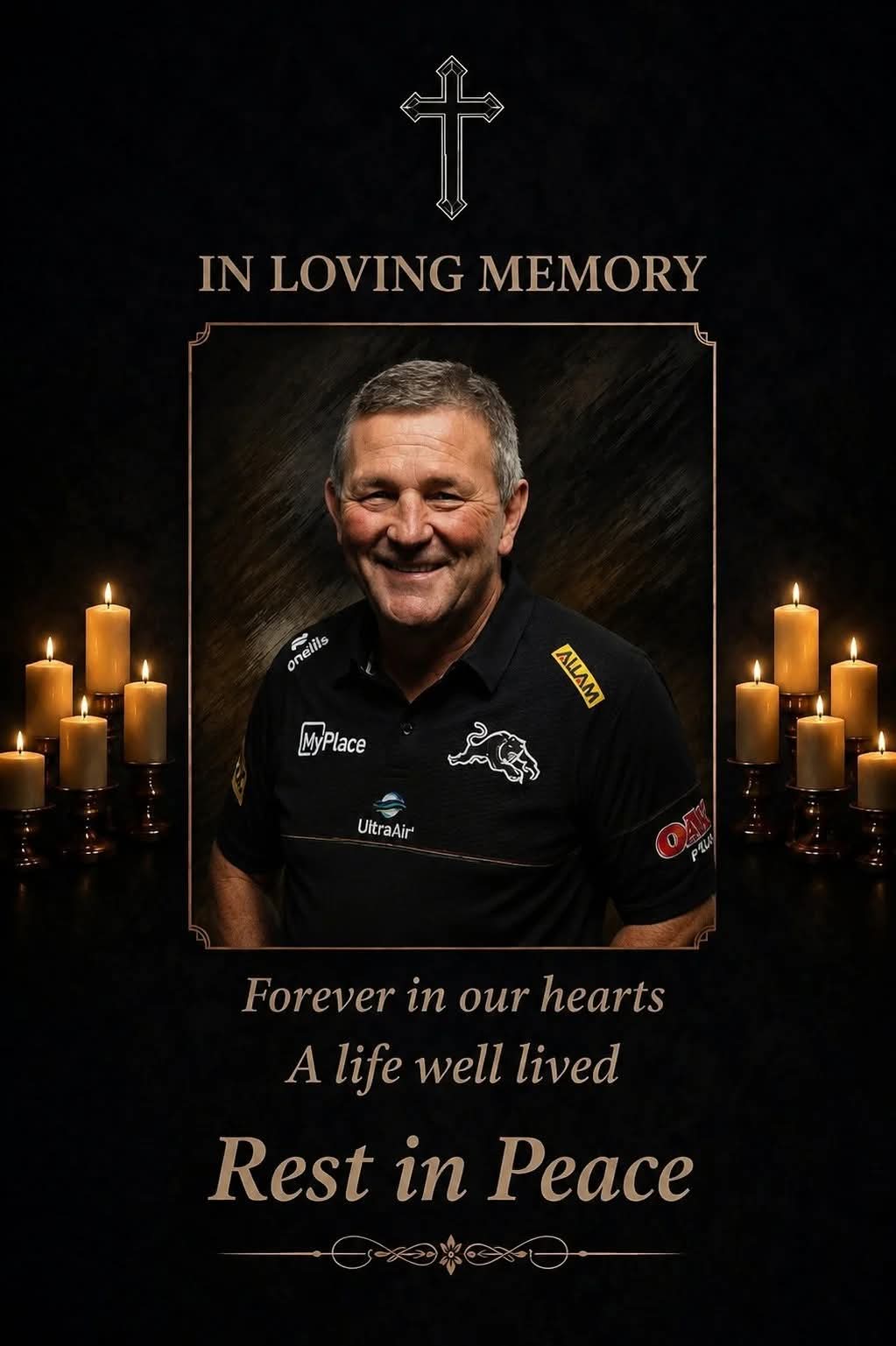
Unverified reports circulating across social media platforms claiming that Penrith Panthers icon Royce Simmons has passed away are entirely false. The 1991 premiership hero and Australian rugby league legend remains alive and continues his inspiring public work. While the viral posts sparked widespread concern among fans, official sources and recent community appearances confirm that Simmons is actively championing dementia awareness through his foundation.
A Career Defined by Loyalty, Grit, and Premiership Glory
Royce Simmons remains one of the most beloved figures in the history of Australian rugby league. Born in Gooloogong, New South Wales, Simmons dedicated his entire top-tier playing career to the Penrith Panthers, serving as a tough, relentless hooker from 1980 through 1991. Over 238 first-grade games, he earned a reputation as the heart and soul of the mountain men, embodying the blue-collar work ethic of Western Sydney.
The defining moment of his playing career arrived in the 1991 NSWRL Grand Final against the Canberra Raiders. Playing in his final professional match, Simmons scored two crucial tries—including the match-sealing score—to deliver Penrith its historic maiden premiership. His celebrated promise to buy every Penrith fan a beer following the victory cemented his status as a legendary folk hero. Beyond club football, Simmons represented New South Wales in 10 State of Origin fixtures and earned 10 caps for the Australian national team, becoming the first Penrith player selected for Test duties.
Transition to Coaching and Continued Service
Following his retirement from playing, Simmons seamlessly transitioned into coaching, staying deeply embedded in the sport he loved. He served as head coach of the Penrith Panthers from 1994 to 2001 and later guided English Super League side St Helens, in addition to holding key assistant coaching roles across the National Rugby League.
Even after stepping down from full-time coaching, Simmons remained an indispensable part of the Panthers organization. His enduring bond with the club made him an easy choice as a community ambassador, where his warmth, humor, and approachable personality continued to unite generations of Penrith supporters.
Tackling Alzheimer’s Disease Head-On
In early 2022, Simmons revealed publicly that he had been diagnosed with younger-onset Alzheimer’s disease at the age of 61. True to his character on the field, Simmons refused to let the daunting medical news keep him on the sidelines. Instead of stepping back, he launched a courageous campaign to raise funds, drive scientific research, and provide support for families navigating similar diagnoses.
Through the establishment of the Royce Simmons Foundation, he organized “Royce’s Big Walk”—an arduous 300-kilometer trek from his hometown of Gooloogong to Penrith’s home stadium. Supported by former teammates, sporting icons, and thousands of well-wishing Australians along the highway, the inaugural event raised over $700,000 for Dementia Australia. Subsequent annual walks and local charity initiatives have continued to accumulate hundreds of thousands of dollars toward memory care and clinical research.
An Enduring Legacy in Western Sydney
Simmons’ ongoing contribution to Western Sydney extends beyond his charitable fundraising. He continues to participate in key civic and club milestones, including stamping his initialed boot prints into the concrete foundations of the newly redeveloped Penrith Stadium. His ongoing fight against dementia serves as a powerful reminder of his resilience, proving that his greatest legacy may well be the hope he brings to others off the field. Supporters are urged to disregard misleading online rumors and continue supporting the vital work of his foundation.