
A Historic Transition Under the Spotlight
Stepping into the shoes of a fallen guitar hero is arguably one of the most terrifying challenges a musician can face. When the brilliantly virtuosic Randy Rhoads tragically passed away in 1982, the heavy metal universe wondered how Ozzy Osbourne would ever recover. The answer came in the form of Jake E. Lee, a blazing talent from the Los Angeles club scene who brought a completely different, razor-sharp energy to Osbourne’s solo outfit. By late 1983, the band launched the iconic *Bark at the Moon* world tour, a high-stakes campaign designed to cement the new lineup’s dominance. It was during this legendary trek that Lee’s mid-concert improvisational pieces established him as an absolute force of nature on the world stage.
The Resurrection of a Legendary Performance
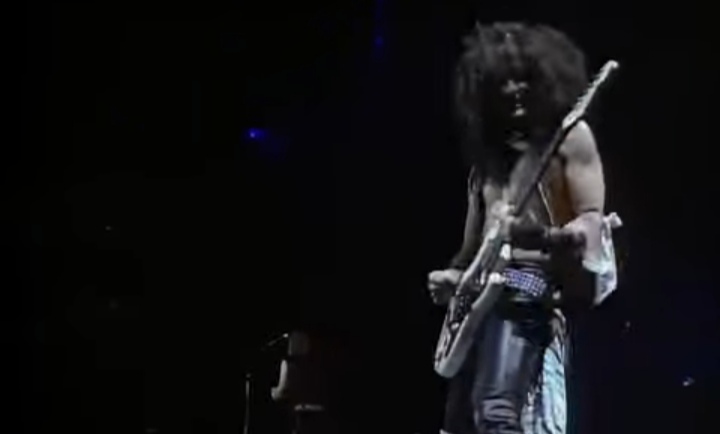
For decades, fans of classic heavy metal had to rely on grainy, heavily degraded VHS bootlegs to catch a glimpse of Lee’s live sorcery from this era. However, the modern digital landscape has completely rewritten the rules of music preservation. The recent arrival of a high-quality, modern upscaled version of Jake E. Lee’s signature 1983 guitar solo section has sent massive shockwaves of excitement through the guitar community. Utilizing advanced visual and auditory interpolation tools, this immaculate restoration breathes fresh life into a historic moment. The enhanced clarity allows audiences to witness every single microtonal pitch-bend, blazing rapid-fire hammer-on, and aggressive pick-harmonic with a level of fidelity that was completely impossible back in the eighties.
Dissecting the Anatomy of the 1983 Solo
What makes the 1983 tour solo so uniquely remarkable is how Lee confidently defied the prevailing structural tropes of the decade. While his contemporaries relied heavily on standard two-handed tapping or predictable neoclassical patterns, Lee injected his live improvisations with an incredibly aggressive, blues-based ferocity. Armed with his heavily modified, signature white Charvel Stratocaster—sporting reversed single-coil pickups—he unleashed an absolute sonic assault. The upscaled footage highlights his impeccable right-hand alternate picking speed and his brilliant mastery of neck-bending, a high-wire physical technique where he manipulated the wood of the guitar neck itself to achieve a haunting, liquid-like vibrato effect without a traditional tremolo bar.
Redefining Ozzy Osbourne’s Sonic Identity
This specific live showcase, often embedded into the heavy arrangement of “Suicide Solution,” was much more than a routine display of individual vanity. It was a declaration of independence for a player who had spent months enduring unfair comparisons from skeptical purists. The upscaled video captures the sheer, unadulterated velocity of a musician playing as if his very life depended on it, executing complex phrasing with absolute pinpoint precision. By the time the solo seamlessly transitioned into the thunderous opening chords of the setlist’s heavier tracks, Lee had effectively redefined the sonic landscape of the band, ensuring the *Bark at the Moon* era would be remembered as a massive triumph.
An Indelible Digital Monument for Gear Enthusiasts
Decades after the final amplifiers were turned off on that tour, this restored piece of history stands as a timeless monument to an era when guitar playing was fiercely physical and completely authentic. The crisp detail of the upscaled footage acts as an educational goldmine for modern players looking to study the nuances of 1980s metal royalty. It serves as a reminder that Jake E. Lee did not merely keep the seat warm for Ozzy Osbourne; he aggressively carved out his own legendary legacy, one staggering live performance at a time.