
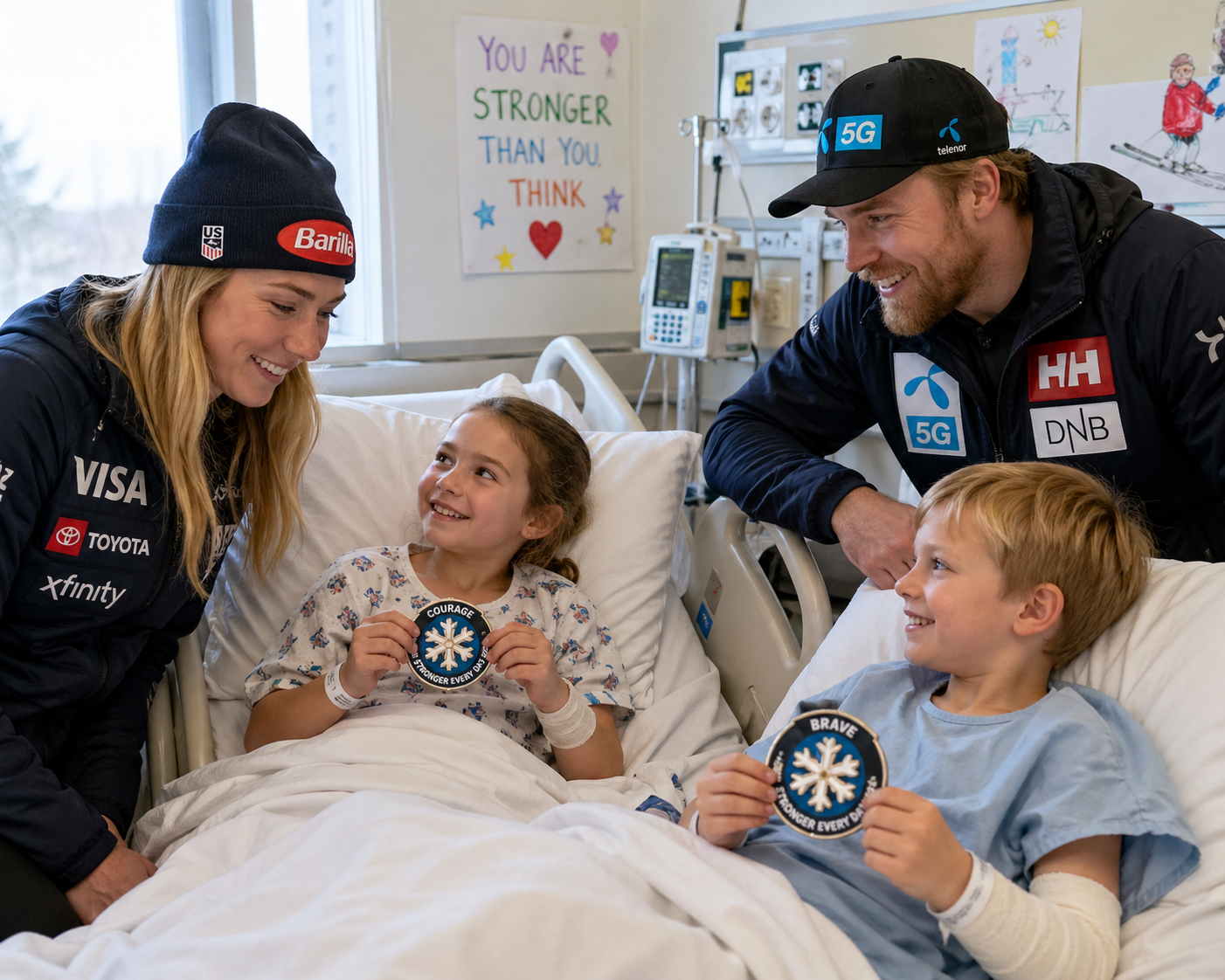
In a heartwarming display of sportsmanship that transcends the podium, alpine skiing’s ultimate power couple, Mikaela Shiffrin and Aleksander Aamodt Kilde, spent their afternoon away from the slopes to visit the pediatric wing of the local university hospital. The visit, which was kept under wraps until their arrival, provided a surge of morale for children recovering from various traumatic accidents.
Champions Beyond the Gates
While the world usually sees Shiffrin and Kilde battling gravity at breakneck speeds, their presence in the hospital ward was marked by a gentle, grounding energy. Dressed in team gear but carrying no sense of celebrity ego, the duo moved from room to room, offering more than just autographs. For these children—many of whom are navigating the long, arduous road of physical therapy following sports-related injuries or accidents—seeing their idols in the flesh served as a powerful reminder of resilience.
Badges of Bravery
The highlight of the visit involved a special ceremony at each bedside. Shiffrin and Kilde presented the young patients with “Bravery Badges”—custom-made pins designed to recognize the courage required for medical recovery. As Kilde leaned over the bed of a young boy recovering from a fractured femur, he shared stories of his own well-documented battles with injury. The physical toll of elite skiing is immense, and Kilde’s candidness about the mental hurdles of rehabilitation resonated deeply with the families present. He emphasized that while a gold medal is a dream, the “gold medal of health” is the ultimate prize.
Shared Strength and Smiles
Mikaela Shiffrin, the most decorated skier in history, took a different approach, focusing on the quiet strength found in patience. She sat with a young girl who had recently undergone surgery, discussing the importance of small victories. “Every day you do your exercises is a win,” Shiffrin was overheard saying. The room, usually filled with the sterile sounds of medical monitors, was instead echoing with laughter as the champions participated in a brief, makeshift game of tabletop “slalom” using water bottles and bedside trays.
A Community of Support
The hospital staff noted that the psychological impact of such a visit cannot be overstated. “When you’re a child in a hospital bed, your world becomes very small,” said Dr. Elena Vance, head of pediatric surgery. “Having Mikaela and Aleksander here expands that world again. It reminds them that they are part of a community that cares.” The visit concluded in the ward’s playroom, where the couple posed for photos with the staff, thanking them for their tireless work behind the scenes.
The Long Run
As the sun set over the hospital, the “Bravery Badges” remained pinned to gowns and pillows—a tangible connection to the world of champions. For Shiffrin and Kilde, the afternoon wasn’t about public relations; it was about the shared human experience of falling down and getting back up. They left the hospital not as icons of speed, but as beacons of empathy, proving that the most impactful tracks they leave aren’t on the snow, but on the hearts of those fighting their own uphill battles.