
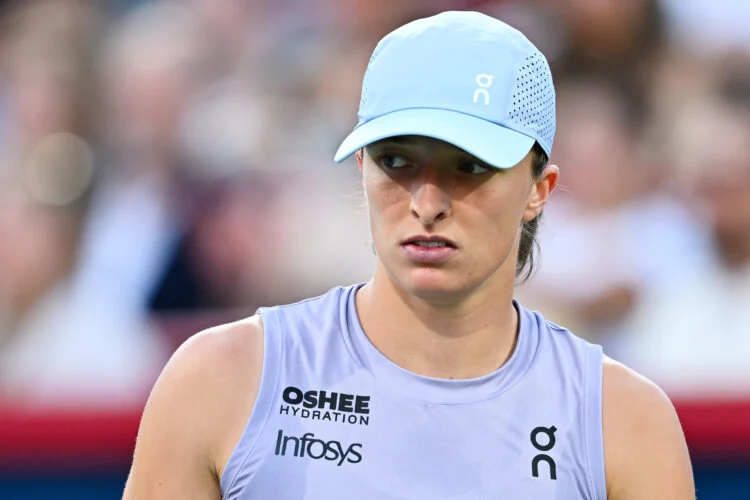
In the high-stakes world of elite tennis, momentum is the only true currency. For world No. 1 Iga Swiatek, the recent decision to overhaul her coaching staff signals a profound shift in philosophy. After a seventeen-month partnership with Wim Fissette—a tenure that notably yielded her maiden Wimbledon Ladies’ Singles title—Swiatek has opted for a change in scenery. The Polish superstar has officially appointed Spaniard Francisco Roig to lead her camp, a move that has sparked intense debate among pundits and former greats alike.
The End of the Fissette Era
The professional relationship between Swiatek and Wim Fissette was, by most statistical measures, a success. Fissette, known for his analytical approach and history of guiding Grand Slam champions, helped Swiatek conquer her grass-court demons to claim the Venus Rosewater Dish. However, the 2026 season began with uncharacteristic turbulence. A series of early exits and a perceived stagnation in her tactical flexibility led to the mutual realization that the partnership had run its course. While Fissette provided the structure necessary for her Wimbledon breakthrough, the “difficult start” to the current calendar year necessitated a fresh perspective to maintain her grip on the top ranking.
Enter Francisco Roig: The Spanish Influence
In choosing Francisco Roig, Swiatek is leaning into a heritage of grit and technical mastery. Roig is best known as the “silent engine” behind Rafael Nadal’s historic career, having served as a cornerstone of the legend’s coaching team for seventeen years. Most recently, Roig has been credited with the rapid ascent of Giovanni Mpetshi-Perricard, showcasing an ability to adapt his coaching style to a variety of player profiles. By hiring a coach deeply rooted in the Spanish school of tennis, Swiatek appears to be seeking a more instinctive, versatile game that can withstand the physical rigors of a grueling tour schedule.
Boris Becker Weighs In
The tennis world hasn’t been shy about analyzing the move. Six-time Grand Slam champion Boris Becker has publicly questioned whether this specific stylistic pivot is the “right choice” for the Pole. Becker noted that while Roig’s pedigree is undeniable, his background is steeped in the heavy topspin and defensive recovery of the clay-court grind. Transitioning from Fissette’s clinical, hard-court-centric strategy to Roig’s more fluid, intuitive approach is a significant gamble. Becker suggests that while the hire is bold, the pressure will be on Roig to prove he can translate his success with ATP power-hitters like Mpetshi-Perricard and Emma Raducanu into Swiatek’s precise, rhythmic baseline game.
Looking Toward the Future
As the tour moves into the clay-court swing—Swiatek’s preferred hunting ground—all eyes will be on the player box. The integration of Roig suggests that Swiatek is looking to add more “tools to the shed,” perhaps incorporating more variety in her slice and net play. If Roig can blend his decades of experience from the Nadal era with Swiatek’s existing athletic dominance, the rest of the WTA field may find the world No. 1 more untouchable than ever. For now, the tennis community remains in a state of watchful anticipation, waiting to see if this Spanish infusion will lead to another haul of major trophies.