
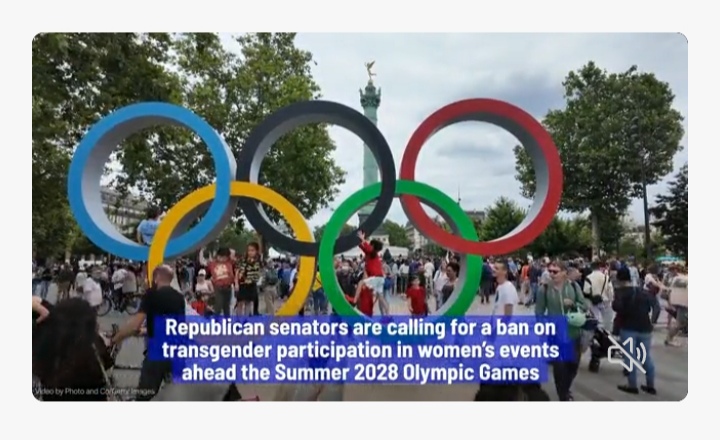
The International Olympic Committee (IOC) has announced a major policy shift that will reshape participation in women’s events at future Olympic Games. Beginning with the Los Angeles 2028 Olympic Games, eligibility for female categories will be restricted to athletes classified as biological females at birth, following the implementation of a new verification system.
The decision marks one of the most significant changes in Olympic eligibility criteria in recent years, sparking immediate global discussion across sporting and advocacy communities.
Gene-Screening Test to Determine Eligibility
Central to the IOC’s new policy is a one-time gene-screening test designed to confirm eligibility for participation in women’s competitions. According to the committee, the measure aims to “ensure fairness and protect safety,” particularly in sports involving physical contact or strength-based competition.
Officials stated that the screening process would be standardized across all participating nations and sports federations, reducing inconsistencies that have previously existed in eligibility rules. The IOC maintains that the approach is rooted in scientific assessment rather than subjective interpretation.
Ban on Transgender Women in Female Categories
Under the revised framework, transgender women will no longer be permitted to compete in female Olympic events. This represents a departure from earlier policies that allowed participation under certain medical and hormonal criteria.
Previously, athletes such as Laurel Hubbard made history by competing in the Olympics as openly transgender participants, following clearance from their respective sporting federations. The new ruling effectively ends such pathways at the Olympic level, regardless of prior eligibility standards.
Inclusion of DSD Athletes in the Policy
The ruling also extends to athletes with differences in sexual development (DSD), particularly those who have experienced male puberty. These athletes will now be subject to the same eligibility restrictions as outlined in the new guidelines.
This aspect of the decision is expected to generate further debate, as DSD regulations have already been a contentious issue in global athletics. The IOC emphasized that the policy is intended to create a consistent framework across all disciplines rather than leaving decisions to individual sports bodies.
Global Reaction and Ongoing Debate
The announcement has triggered mixed reactions worldwide. Supporters argue that the policy reinforces competitive fairness and preserves the integrity of women’s sport. Critics, however, contend that the decision excludes transgender and certain intersex athletes, raising concerns about inclusivity and human rights.
Advocacy groups and sports organizations are expected to challenge or seek clarification on aspects of the ruling in the coming months. Meanwhile, the IOC has indicated that further guidance and implementation details will be released ahead of the Los Angeles Games.
As preparations continue for LA 2028, the long-term impact of this decision on athletes, federations, and the broader Olympic movement remains a topic of intense scrutiny.