
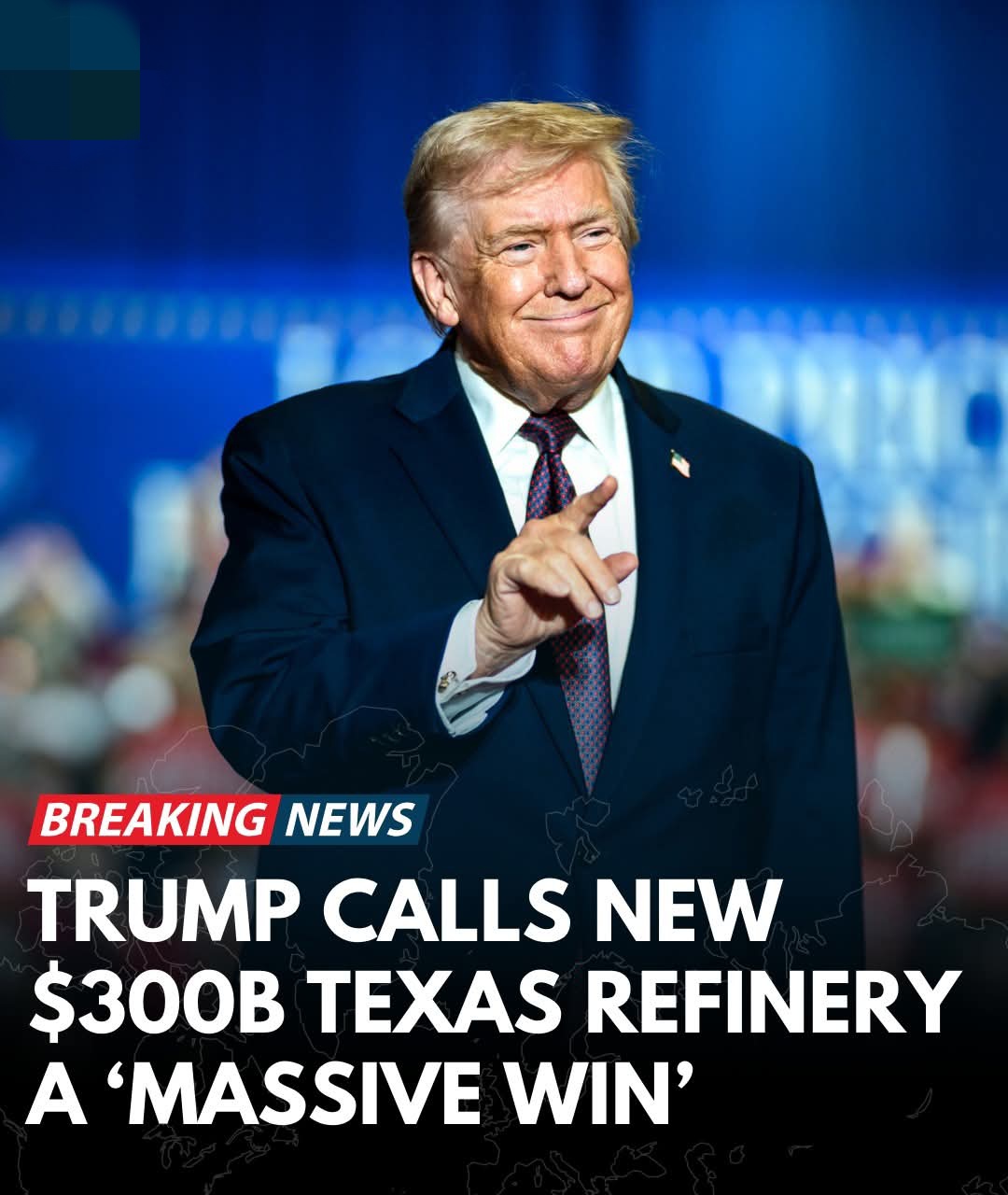
Historic Energy Investment Proposed in Texas
U.S. President Donald Trump has announced plans for a massive $300 billion oil refinery project in Texas, a move he described as a historic step toward restoring American energy dominance. The proposed refinery is expected to be built at the Port of Brownsville, a strategic location along the Gulf Coast known for its growing energy infrastructure and access to international shipping routes.
Trump made the announcement on Tuesday through a message posted on his social media platform, Truth Social, where he highlighted the project as a major milestone for the country’s energy sector.
First New U.S. Refinery in Half a Century
According to the president, the proposed facility would be the first newly constructed oil refinery in the United States in approximately 50 years. If completed, the refinery would mark one of the largest energy infrastructure projects in modern U.S. history.
Trump emphasized that the project represents a return to what he described as “real energy dominance,” signaling his administration’s broader effort to expand domestic oil production and refining capacity. The announcement comes amid ongoing global discussions about energy security and supply stability.
Boost for Domestic Energy Production
Officials say the refinery would play a critical role in strengthening U.S. energy production and refining capacity, allowing more crude oil to be processed domestically rather than exported in raw form. The facility would supply petroleum products to American markets while also supporting energy exports to global partners.
Energy analysts note that expanding refining capacity could help the United States maintain a strong position in international energy markets, particularly as demand for refined fuels remains significant in many parts of the world.
International Partnerships Expected
Trump also indicated that the refinery project will involve international investment partners, including Reliance Industries, one of India’s largest energy and petrochemical companies. The partnership signals the project’s potential global scope and reflects continued collaboration between U.S. and international energy firms.
While full details of the investment structure have not yet been released, officials suggest the project could attract funding and expertise from multiple international energy companies.
Economic Impact and Job Creation
The administration says the refinery will create thousands of jobs during both construction and long-term operations. Large-scale refinery projects typically employ tens of thousands of workers during construction phases, with several thousand permanent positions once operational.
Supporters argue the project could significantly boost economic activity in the Texas Gulf Coast region, which already serves as one of the world’s largest energy hubs. Local industries including shipping, engineering, and petrochemical manufacturing could also benefit from the development.
Linked to Regulatory and Tax Policies
Trump tied the investment directly to his administration’s economic policies, stating that reduced regulations and lower taxes have helped create an environment that encourages large-scale industrial investment. The administration has repeatedly argued that regulatory reforms and energy-friendly policies are key to expanding domestic energy infrastructure.
Critics, however, have raised questions about the environmental implications of constructing a new refinery, particularly as global conversations around energy transition and emissions reduction continue.
Part of a Broader Energy Strategy
The proposed refinery aligns with the administration’s broader agenda to expand domestic energy production and infrastructure. Trump has consistently promoted policies aimed at increasing oil and gas output, strengthening U.S. energy independence, and boosting exports.
If the project proceeds as planned, it could become one of the most significant refinery developments in decades, reinforcing the Gulf Coast’s role as a major center of global energy production.
Industry experts say the coming months will be crucial as environmental reviews, investment agreements, and construction planning begin to take shape.