
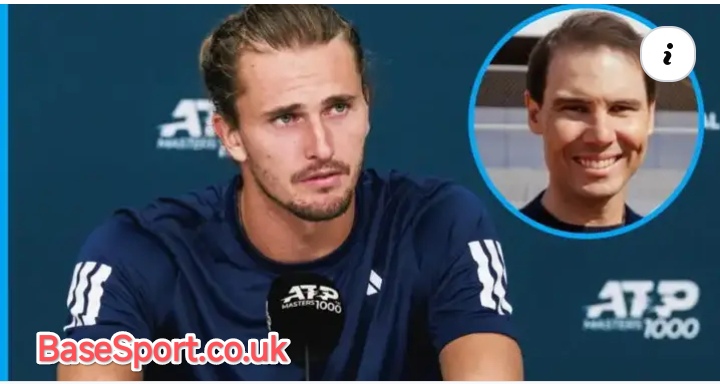
For Alexander Zverev, the path to a maiden Grand Slam title has often felt less like a sporting journey and more like a Greek tragedy. Despite being a perennial top-five fixture, the German star continues to grapple with what fans and analysts have dubbed the “Nadal Curse”—a psychological hurdle rooted in the looming shadow of tennis’s greatest warriors and the crushing weight of high-stakes expectations.
The Ghost of 2026: A Faded Dream
While the 2026 season was meant to be Zverev’s definitive breakthrough, the echoes of his past failures remain loud. Following a heartbreaking semifinal exit at the Australian Open earlier this year—where he held a decisive lead against Carlos Alcaraz before “fading” at the finish line—the conversation around Zverev’s mental fortitude has reached a fever pitch. In that match, Zverev served for the win in the fifth set only to see his most reliable weapon, his serve, crumble under the pressure of the moment.
Toni Nadal’s Harsh Assessment
The term “Nadal Curse” doesn’t just refer to the legendary Rafael Nadal’s dominance on the court, but to the standard of mental invincibility set by his camp. Toni Nadal, the architect of Rafa’s success, recently offered a scathing critique of Zverev, suggesting that the German suffers from a “mental problem” and a counterproductive “obsession with winning.” According to Toni, Zverev’s tendency to falter when serving for matches is not a physical failure, but a psychological one—a recurring theme where the “fear of losing” outweighs the “drive to win.”
The “Mental Hole” and the Weight of Loneliness
Zverev has been remarkably candid about his internal struggles, admitting that he has been in a “mental hole” for significant portions of the last two seasons. Following a shock first-round exit at Wimbledon 2025, he confessed to feeling “empty” and “lonely” on the tour, revealing that even victories no longer brought him the joy they once did. This lack of emotional equilibrium often manifests as a physical “collapse” during five-set marathons, where the fatigue of the mind eventually paralyzes the body.
Breaking the Grand Slam Duck
As the 2026 season progresses toward the US Open, the pressure on Zverev is immense. With three Grand Slam runner-up finishes already on his resume, he remains the “best player to never win a major.” To break the “curse,” Zverev must move beyond the “negative self-talk” noted by fellow players like Boris Becker and Andrea Petkovic. The “Nadal Curse” is ultimately a battle of the self—a test of whether Zverev can finally trust his skills in the moments when the trophy is within reach.