
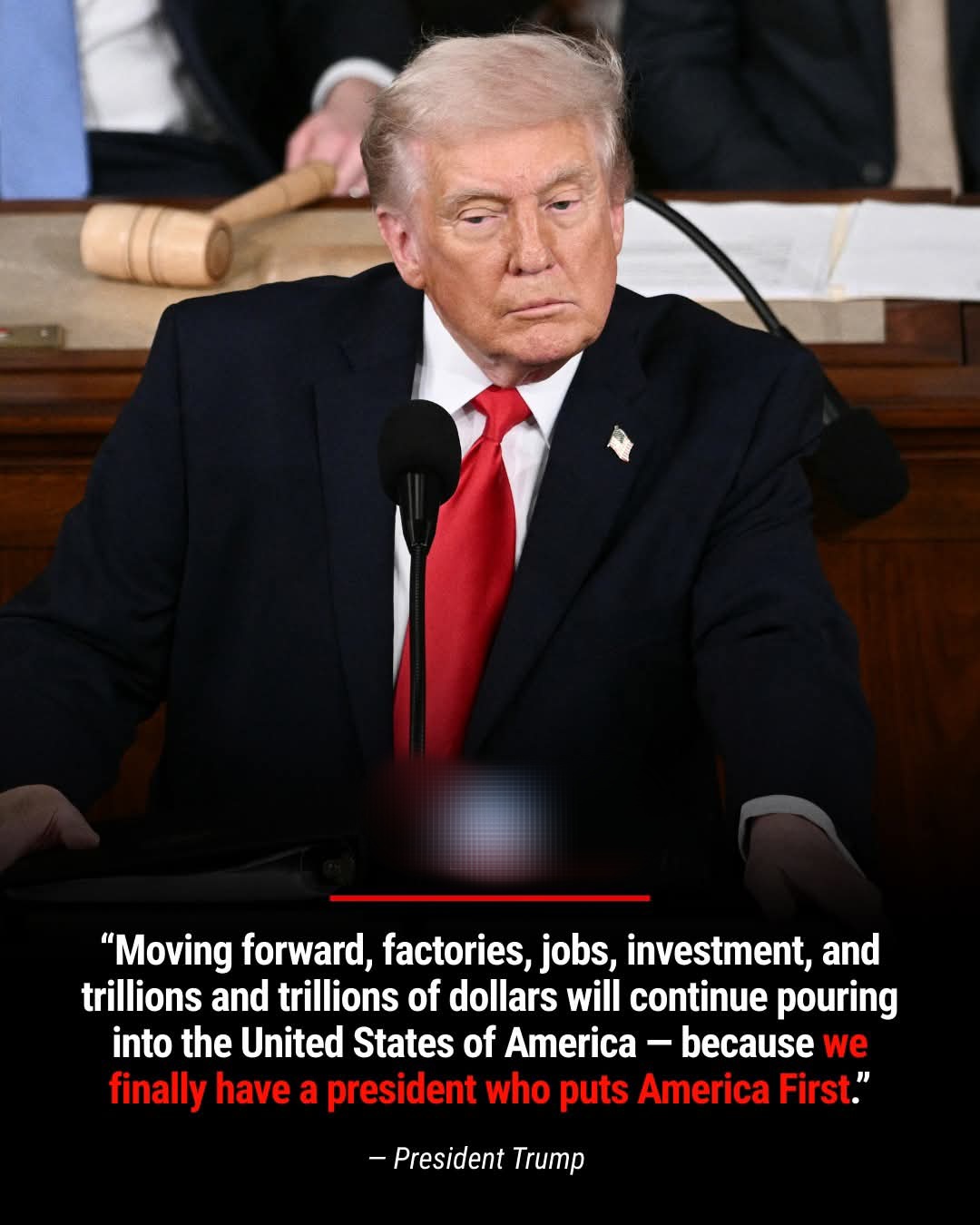
President Donald Trump declared that jobs and investment would “flood” into the United States, crediting what he called a renewed commitment to his “America First” agenda. Speaking to supporters, Trump argued that the country is positioned for a major economic resurgence because, in his words, it “finally has a president who puts America first.”
The remarks reflect a central theme that has defined Trump’s political brand since his first presidential campaign: prioritizing domestic industries, tightening trade relationships, and encouraging companies to expand operations within U.S. borders. Trump framed his leadership as a decisive shift away from policies he claims favored foreign interests at the expense of American workers.
Economic Optimism and Investment Claims
During his address, Trump predicted that manufacturers, technology firms, and energy companies would accelerate investments across the country. He pointed to what he described as renewed business confidence, asserting that corporate leaders are responding positively to deregulation efforts and tax policies designed to stimulate growth.
Trump emphasized that American workers would be the primary beneficiaries of this anticipated expansion. He suggested that rising investment would translate into job creation across multiple sectors, including manufacturing, construction, and energy production.
While the president offered broad projections, he did not cite specific figures during the remarks. Economists note that business investment decisions are influenced by a range of factors, including interest rates, global demand, labor market conditions, and regulatory stability.
‘America First’ as Policy Framework
The “America First” slogan has served as a guiding principle for Trump’s economic and foreign policy approach. The framework includes renegotiating trade agreements, imposing tariffs in certain cases, strengthening border enforcement, and promoting domestic production.
Supporters argue that the strategy encourages companies to bring supply chains back to the United States and reduces dependence on foreign manufacturing. Critics, however, caution that protectionist measures can raise costs for businesses and consumers while triggering retaliatory trade actions.
Trump has consistently defended the policy as a necessary correction to decades of globalization, claiming it restores leverage to American negotiators and safeguards domestic employment.
Political and Economic Implications
The president’s prediction of a surge in jobs and investment comes at a time when economic performance remains a central issue in national politics. Employment numbers, inflation trends, and wage growth continue to shape public sentiment heading into key political cycles.
Analysts say that while presidential policies can influence economic direction, broader global forces also play a significant role. Market conditions, technological shifts, and international trade patterns all contribute to shaping economic outcomes.
Still, Trump’s message was clear: he believes that prioritizing American interests will produce measurable gains. By tying projected economic growth to his leadership style, he reinforced a campaign narrative centered on economic nationalism and domestic revival.