
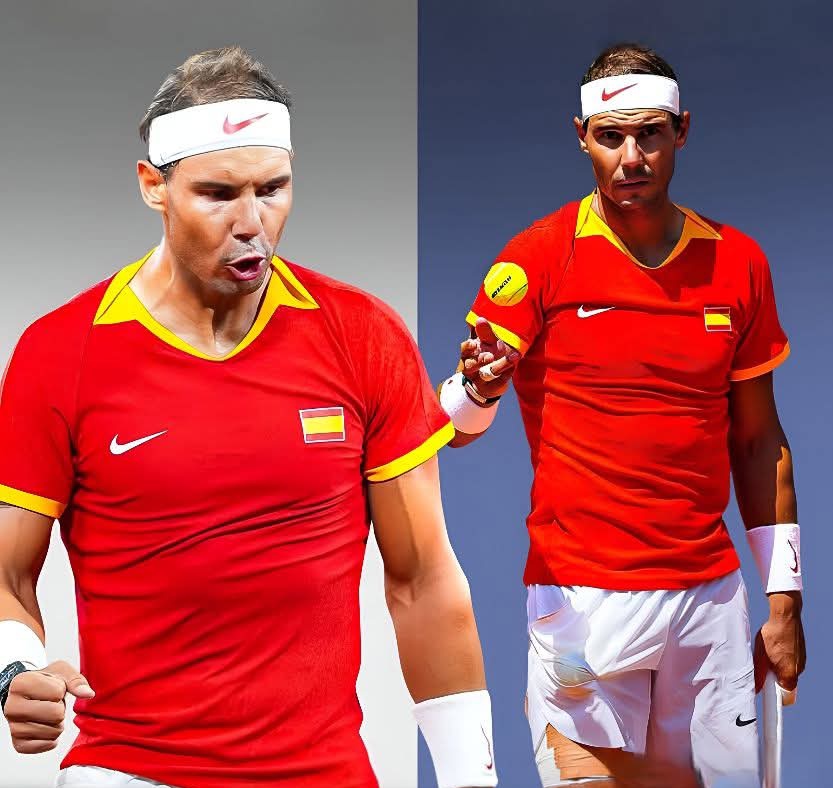
The tennis world may never fully grasp just how close it came to witnessing something truly unprecedented. Rafael Nadal, already one of the most decorated athletes in sports history, achieved his greatness while constantly fighting against a body that repeatedly betrayed him. The uncomfortable truth is this: an injury-free Nadal might have rewritten the record books to a degree that would leave the greatest debates in tennis utterly one-sided.
Nadal retired with 22 Grand Slam titles, a number that places him firmly among the sport’s immortals. Yet that figure, impressive as it is, tells only part of the story. For much of his career, Nadal competed on what often felt like borrowed time. His medical history became nearly as famous as his ferocious forehand, filled with chronic foot issues, knee problems, wrist injuries, abdominal tears, and recurring muscle breakdowns that repeatedly interrupted his momentum.
Despite these setbacks, Nadal consistently returned to the court and dominated eras filled with legends. However, when the raw data is examined, the scale of what injuries cost him becomes startling. Nadal missed 18 Grand Slam tournaments due to physical issues. That equates to nearly five full seasons of major championships lost during what should have been the absolute prime of his career.
In modern tennis, where players often peak for shorter windows, losing that amount of time is devastating. Yet Nadal still conquered the sport. The hypothetical question becomes unavoidable: what happens if those 18 missing chapters are restored?
The answer is uncomfortable for the rest of the tennis world. Nadal was not simply a great champion; he was arguably the fiercest competitor the sport has ever seen. His ability to endure pain, adjust his game, and rise to the biggest moments was unmatched. On the clay courts of Roland Garros, he became almost mythical, winning an astonishing 14 French Open titles—many of them while dealing with chronic pain that would have sidelined most athletes permanently.
Those Paris victories alone underline how absurd his ceiling truly was. Nadal was dominating the most physically demanding surface in tennis while his body was actively limiting him. The idea of a fully healthy Nadal, entering every major with optimal preparation and no physical restraints, pushes the imagination beyond comfort.
Had Nadal been available for those 18 missed Grand Slam appearances, the conversation likely shifts from 22 titles to numbers well north of 30. In that scenario, the long-standing GOAT debate may not exist in its current form. Instead of comparing legacies, the discussion might have centered on how far ahead Nadal stood from everyone else.
The reality, perhaps inconvenient for fans of competitive balance, is that the tour was fortunate Nadal’s body imposed limits that his talent never did. A fully healthy Rafael Nadal may simply have been too dominant for the sport to absorb. He was, in many ways, a glitch in the system—one that only injury could slow down.
In the end, Nadal’s legacy is not diminished by what might have been. If anything, it is enhanced. The fact that he reached such historic heights while constantly battling his own physical limitations makes his career not just legendary, but almost incomprehensible.