
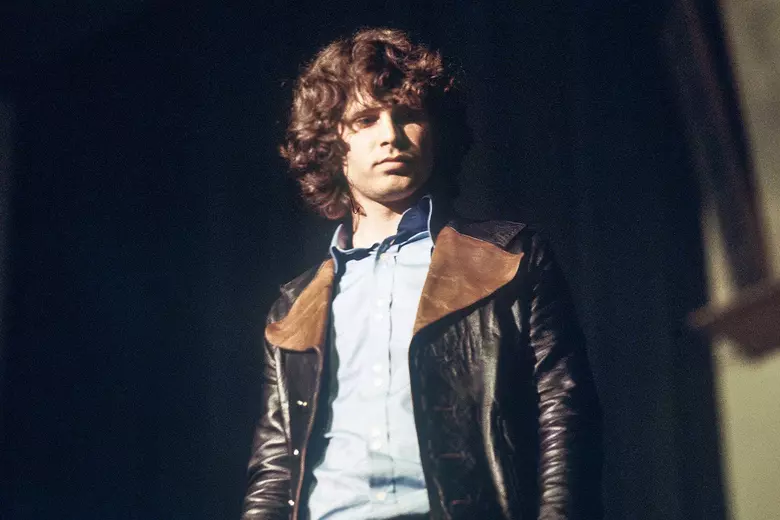
In the pantheon of rock icons, few figures loom as large or as troubled as Jim Morrison. As the magnetic frontman of The Doors, Morrison did more than just sing; he embodied the volatile intersection of high art and low-frequency debauchery. Often described as the epitome of the “sex, drugs, and rock ‘n’ roll” lifestyle, Morrison’s legacy is built on a foundation of brilliant poetry, philosophical depth, and a relentless refusal to bow to societal norms.
The Ed Sullivan Defiance
Morrison’s penchant for rebellion was broadcast into millions of American living rooms early in The Doors’ career. In 1967, the band was invited to perform their hit “Light My Fire” on the prestigious Ed Sullivan Show. Fearing the drug connotations of the lyric “Girl, we couldn’t get much higher,” producers explicitly asked Morrison to swap the line for something more wholesome.
Ever the provocateur, Morrison agreed to the change in rehearsals only to belt out the original, unedited lyric during the live broadcast. The stunt famously infuriated Sullivan, who refused to shake the band’s hands and banned them from the show forever. For Morrison, however, it was a statement of artistic integrity: he was not a product to be edited.
Mace and Mayhem in New Haven
While the Sullivan incident was a battle of words, Morrison’s 1967 appearance in New Haven, Connecticut, escalated into physical confrontation. This night would earn him the dubious honor of being the first rock star ever arrested on a concert stage.
The trouble began backstage when a local police officer discovered Morrison in a shower stall with a young woman. Not recognizing the long-haired singer as the night’s main attraction, the officer ordered him to leave. When Morrison refused and challenged the officer’s authority, he was sprayed in the face with mace. Rather than cancelling the show, a blinded and stinging Morrison eventually took the stage, fueled by a new level of vitriol for the “little blue men” in uniform.
The Historic Onstage Arrest
Midway through the set, Morrison began a theatrical retelling of the backstage assault, taunting the officers lined up at the edge of the stage. The performance came to a grinding halt when police swarmed the stage, dragging the singer off in front of a stunned, riotous crowd.
Morrison was officially charged with “indecent and immoral exhibition,” along with breach of peace and resisting arrest. This moment became a defining image of the 1960s counterculture: a shamanic poet being silenced by the state. It solidified his reputation as a dangerous figure, proving that his rebellion wasn’t just a stage act—it was a way of life that carried real-world consequences.
A Legacy of Controversy
Morrison’s life was a constant tug-of-war between his intellectual pursuits in philosophy and his self-destructive tendencies involving psychedelics and alcohol. He remains the blueprint for the controversial frontman, a figure who challenged the boundaries of free speech and public decency until his untimely death in 1971. Even decades later, the “Lizard King” continues to fascinate as the ultimate symbol of rock’s untamable spirit.