
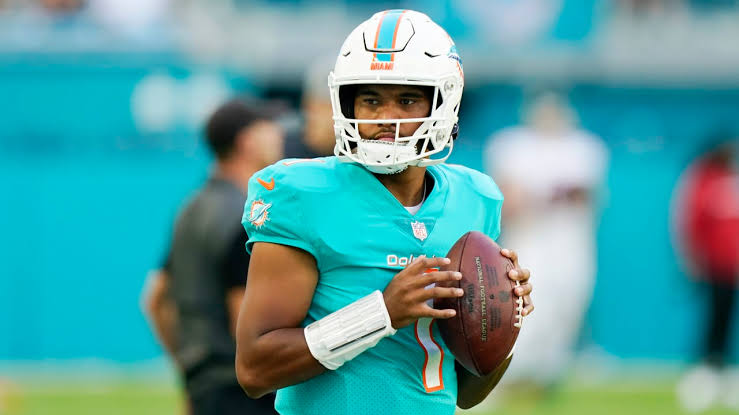
The Miami Dolphins are currently a masterclass in what happens when a franchise lets desperation dictate its depth chart. After a demoralizing 45-21 home loss to a struggling Cincinnati Bengals squad this past Sunday, the verdict is in: the decision to bench Tua Tagovailoa wasn’t just a mistake—it was a self-inflicted wound that may have permanently scarred the Mike McDaniel era.
For a brief, shimmering moment in the first half, it looked like McDaniel was a visionary. Quinn Ewers, the seventh-round rookie thrust into the spotlight, came out firing. The Hard Rock Stadium crowd was electric, and social media was already doing what it does best—drawing absurd comparisons between Ewers and Tom Brady. The “genius card” McDaniel had seemingly lost over the last month was being enthusiastically reissued by a fan base starved for relevance.
But as we’ve seen so many times in the NFL, the “Christmas Week miracle” turned into a holiday horror story.
The Second-Half Reality Check
The collapse wasn’t subtle; it was a total disintegration. In the second half, the Bengals didn’t just beat the Dolphins; they embarrassed them. Ewers, who looked like a savior in the first quarter, looked exactly like a seventh-round rookie by the fourth. Two back-breaking interceptions signaled the end of the honeymoon phase, and suddenly, the “inspiration” behind the quarterback change looked like nothing more than a desperate popularity grab by a coach under fire.
McDaniel’s justification for the move—that Ewers gave the team the “best chance to win”—was exposed as a fallacy. Vegas knew it; the betting line on the Dolphins as underdogs doubled the moment the QB change was announced. The locker room likely knew it, too. You don’t bench a six-year starter like Tua for a late-round flyer unless you’ve reached a point of total organizational panic.
A Coach in Defensive Mode
In the aftermath, McDaniel attempted to find silver linings where there were only grey clouds. He spoke about the game “not being too big” for Ewers and emphasized the “positive stuff” from the first half. But in the NFL, you don’t get points for a promising start if you can’t finish the job. Taking a “step back” to see the positives is a luxury for a rebuilding team, not a franchise that was supposed to be a contender.
The “venom and anger” McDaniel alluded to from the fans isn’t just about one loss; it’s about the realization that the team may have quit on their franchise quarterback too soon. By turning to Ewers, the Dolphins didn’t find a spark—they extinguished the last bit of stability they had left.
Where Do the Dolphins Go Now?
Miami got exactly what they deserved on Sunday. They chose the unknown over the established, and the “new car smell” of a rookie quarterback evaporated before the third quarter ended. If this was a move to save the season, it backfired spectacularly.
The Dolphins are now a team without an identity, led by a coach who seems to be coaching for approval rather than results. Sunday’s loss wasn’t just a tally in the L column; it was a loud, clear message that shortcuts to greatness usually lead to a dead end.