
MELBOURNE – As the summer heat begins to shimmer over the hard courts of Melbourne Park, the tennis world prepares for a familiar sight: Novak Djokovic, the undisputed king of the Australian Open, arriving to defend his territory. With ten titles already secured in the coastal metropolis, the Serbian maestro is not merely looking for another trophy; he is chasing an unprecedented 25th Grand Slam title that would move him past Margaret Court for the most major singles titles in the history of the sport.
The 2026 Australian Open marks a significant milestone in Djokovic’s storied career. This will be his 81st Grand Slam appearance, a testament to a level of longevity and physical discipline rarely seen in professional sports. By stepping onto the court for his opening match, he will equal the record for the most Men’s Singles Grand Slam appearances in the Open Era, a feat previously shared by Roger Federer and Feliciano Lopez.
However, the road to immortality is paved with more than just statistics. Djokovic’s history in Melbourne is defined by epic battles and a complex relationship with the sport’s rigid regulations. Often, the conversation surrounding the Serb has been as much about the “rulebook” as it has been about his backhand.
The Rule That Nearly Broke the Giants
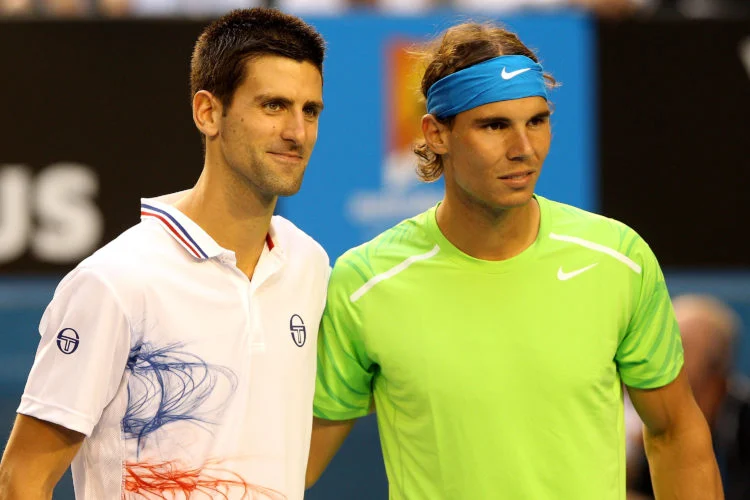
Reflecting on the legendary 2012 Australian Open final—a grueling five-hour and 53-minute marathon against Rafael Nadal—Djokovic has frequently pointed to the physical and regulatory toll such matches take. During that era, the ATP and Grand Slam officials began a major crackdown on slow play and time violations.
Djokovic and Nadal, both known for their meticulous pre-serve routines, found themselves in a unique danger zone. The Serb famously noted that the strict 20-second (now 25-second) serve clock threatened to penalize the very essence of their competitive spirit. During that historic final, both men were so physically spent that they were provided chairs during the trophy ceremony. Djokovic later joked that if officials had strictly enforced the time-violation rules without “leeway for the drama,” both he and Nadal would have been in constant danger of being penalized out of the most celebrated match in tennis history.
It is a rule that Djokovic has continued to spar with throughout his career. Even in more recent outings, his habit of “bouncing the ball” or taking a moment to breathe after a 30-shot rally has led to tense exchanges with chair umpires. As he enters his 81st major, his ability to manage the clock while managing his 38-year-old body will be a crucial subplot.
A New Generation of Challengers
The quest for number 25 will not be a victory lap. The landscape of men’s tennis has shifted, with young powerhouses like Jannik Sinner and Carlos Alcaraz now standing as the gatekeepers of the Grand Slam trophies. Djokovic has seen his dominance challenged recently, with Sinner ending his bid in Melbourne last year.
Yet, there is a reason Djokovic is a 10-time champion here. The blue courts of Rod Laver Arena are his “living room.” His 2012 victory over Nadal proved he could endure the most extreme physical tests, and his return this year proves his mental hunger remains unsated.
As the tournament nears, the narrative is clear: Can the veteran defy time and the rulebook one more time? Whether he is battling the serve clock or the relentless baseline game of a player half his age, Novak Djokovic remains the man to beat. In Melbourne, where his legend began, the world will watch to see if he can finally stand alone at the summit of tennis history.