
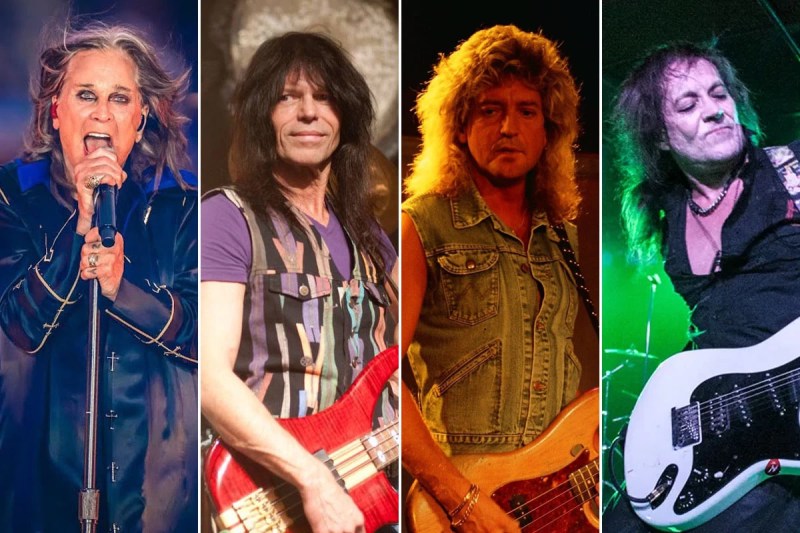
🎸 The Rock and Roll Hall of Fame induction ceremony is typically a night of celebration, a tribute to the enduring legacy of rock music legends. However, the recent solo induction of the “Prince of Darkness,” Ozzy Osbourne, has sparked a notable controversy among fans and former collaborators, particularly concerning those omitted from his acceptance speech. Bassist Rudy Sarzo of Quiet Riot and Whitesnake fame has publicly weighed in on the matter, subtly highlighting the perceived slight against pivotal musicians who shaped Osbourne’s formidable solo career.
The Solo Ozzy Osbourne Induction and the Omission
Ozzy Osbourne, already a Rock Hall inductee as a member of the legendary band Black Sabbath (inducted in 2006), received his long-overdue second honor as a solo artist on October 19th. This induction officially recognizes his incredible run since parting ways with Black Sabbath, a period that cemented his status as a Heavy Metal icon and a global music superstar.
Yet, as often happens in the storied history of classic rock and heavy metal bands, success is a collective effort. Osbourne’s solo discography—which features foundational and best-selling albums like Blizzard of Ozz and Diary of a Madman—owes its sonic architecture to a rotating cast of supremely talented session musicians and band members.
Following the ceremony, the conversation quickly shifted from celebration to scrutiny. A fan, commenting on the social media platform X (formerly Twitter), expressed a widely held sentiment, directly tagging Sarzo: “Finally. Wish he would of thanked Bob Daisley, Lee Kerslake, Jake E. Lee, Tommy Aldrich & Rudy Sarzo.”
Sarzo’s Response: A Nod to Randy Rhoads
Rudy Sarzo, known for his definitive bass work across multiple rock genres and for his time in Osbourne’s band during the Speak of the Devil era, offered a measured yet telling response. Instead of focusing on the musicians who weren’t mentioned, Sarzo’s reply pointed to the one key figure who was acknowledged: the late, great guitarist, Randy Rhoads. Sarzo simply noted, “He did thank Randy Rhoads.”
This concise comment speaks volumes. Randy Rhoads, tragically killed in a 1982 plane crash, is universally credited as the co-architect of Osbourne’s initial solo sound, composing the iconic riffs on his first two albums. By affirming the mention of Rhoads, Sarzo indirectly underscores the fact that the contributions of other crucial musicians—such as the aforementioned Bob Daisley (bassist and lyricist) and Jake E. Lee (guitarist on Bark at the Moon and The Ultimate Sin)—appear to have been overlooked in the public address.
The Heart of the Controversy: Uncredited Contributions
The controversy surrounding the omissions of musicians like Bob Daisley and Lee Kerslake (drummer) is particularly poignant. Daisley, in addition to playing bass, co-wrote the vast majority of the lyrics and music on Blizzard of Ozz and Diary of a Madman. Jake E. Lee also penned significant tracks on his two albums with Osbourne. The lack of public acknowledgment at such a high-profile, career-defining event has been a long-running source of tension and legal disputes over songwriting credits and royalties, making the Rock Hall omission a fresh wound for many metal music enthusiasts and the musicians themselves.
While Osbourne’s solo induction is a testament to his undeniable star power and influence on heavy metal culture, the current discourse, amplified by a public statement from an insider like Rudy Sarzo, serves as a powerful reminder: the best rock music is often a collaborative masterpiece. The solo career that earned Ozzy this second Rock Hall honor was built on the exceptional talent and dedication of the very musicians who now stand in the shadows of the spotlight. This ongoing debate about credit and recognition continues to be a compelling subplot in the history of rock and roll.