
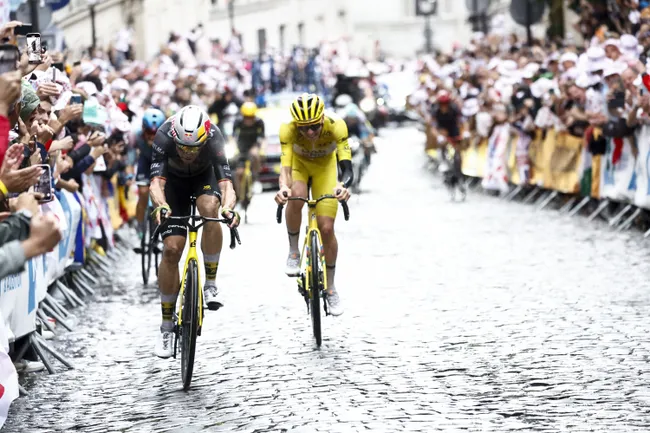
🧠 Belgian cycling star Wout van Aert has offered a candid look into the mental toll exacted by his two severe crashes in the 2024 season, admitting to a profound shift in his racing mentality that hindered his performance in crucial moments. Speaking in an extensive interview with the Belgian newspaper Nieuwsblad, the Visma–Lease a Bike rider revealed that the fear of a repeat injury led to hesitation, creating a frustrating psychological battle between caution and competitive drive.
Van Aert’s 2024 season was brutally bookended by serious injuries: a heavy crash at Dwars door Vlaanderen in the Spring Classics campaign, which caused a broken collarbone and several ribs, and a disastrous descending crash at the Vuelta a España in the autumn, which resulted in a severe knee injury and ended his season prematurely.
⚖️ The Battle Between Relief and Frustration
The lingering trauma from these events, particularly the psychological cost of facing lengthy and complicated recovery processes twice in one year, led Van Aert to adopt an unusually cautious style.
“I didn’t dare to throw myself in,” Van Aert confessed to Nieuwsblad. He elaborated on the internal conflict that plagued him during races, particularly in the cut-and-thrust of the peloton: “I was torn between being happy that I didn’t crash, yet frustrated that I wasn’t in position.”
This mental struggle, which he admits was a problem throughout the spring, forced him to pull back when instinctively he would have plunged into the fray. This hesitation proved decisive in high-stakes races, where a split-second difference in positioning can dictate the outcome, particularly over the treacherous cobblestones of the Classics. For a rider known for his aggressive, all-in approach, this self-imposed caution was deeply unsettling.
🚫 The Realization: Not Happy Just Riding Along
Van Aert quickly realized that this defensive style was not only hindering his results but was fundamentally changing his relationship with the sport. “I found that just riding along didn’t make me happy,” he stated. This internal acknowledgment was the first step in his recovery, signaling that the psychological battle was as important as the physical rehabilitation.
The star rider noted that the consequences of repeated serious injuries are compounded by age and life changes, specifically the added responsibility of having a family and children. This perspective adds a layer of complexity to the fearless abandon often demanded of top cyclists.
Despite the setbacks, Van Aert managed to bounce back in spectacular fashion during the later half of the season, scoring stunning victories at the Giro d’Italia and the Tour de France. His triumphs proved that the desire and form were still present, demonstrating his characteristic mental fortitude and resilience to overcome the psychological scars and fully commit to winning again. The honest reflection serves as a powerful reminder that even the toughest athletes carry the invisible weight of past trauma, requiring a complete mental, as well as physical, “rethink” to regain their winning edge.